
BOILING HOUSE EQUIPMENT
BOILING HOUSE EQUIPMENT

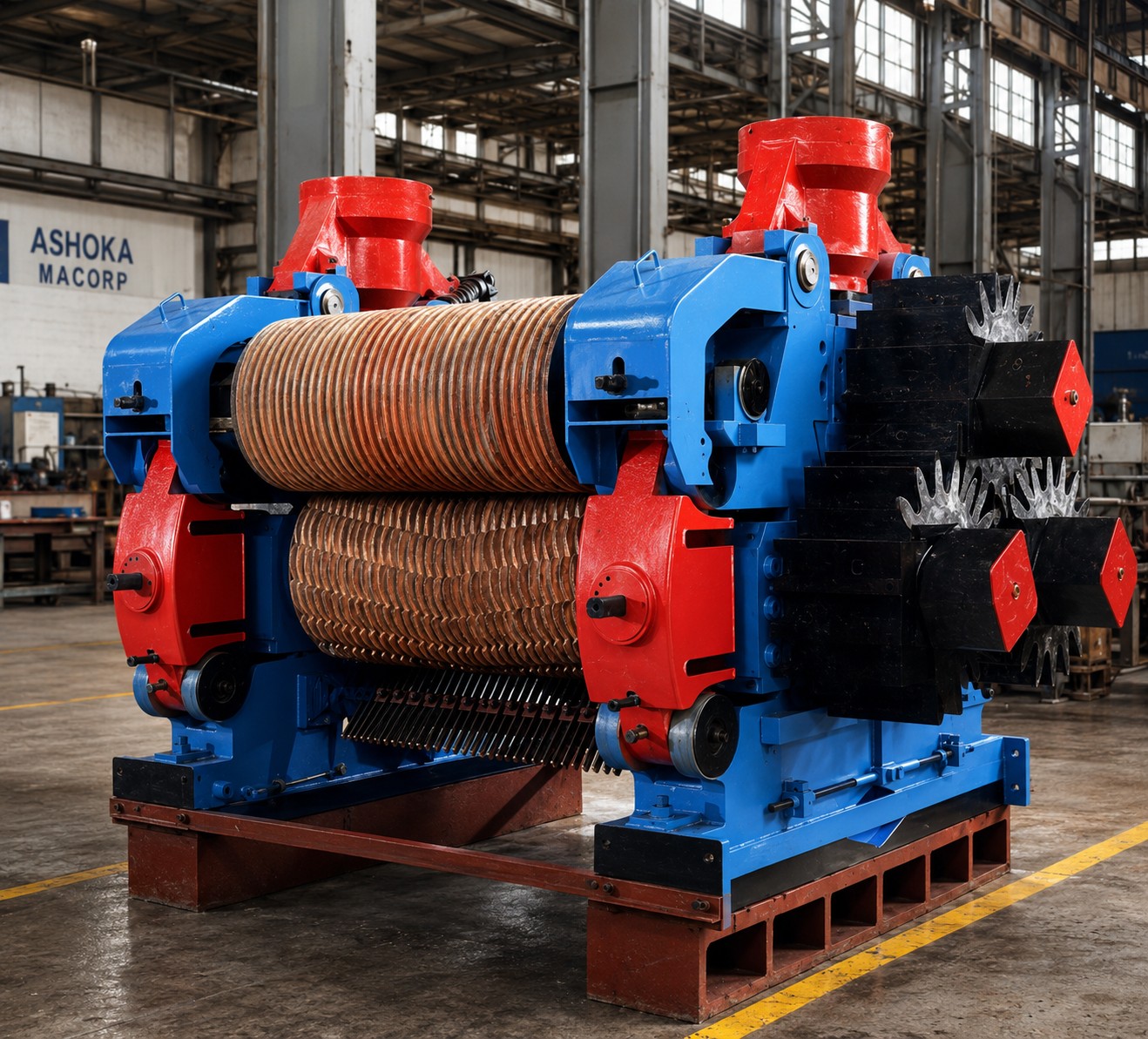
Application
Working Principal
Q = h· A· ΔTlog
where
• Q= heat transfered [kW]
• h= OHTC [kW/m2K]
• A= heat transfer area [m2]
• ΔTlog= LMTD
The amount of heat transferred is calculated by Q = m· (h1 - h0)
It is important to keep the juice velocity in the tubes in the range 1.5 m/s to 2 m/s; if the juice velocity is too low the OHTC is low and the heater is prone to scaling of the tubes, if the juice velocity in the tubes is too high there will be a high pressure drop across the heater resulting in a higher pumping load on the juice pumps.
Design Features
• Vertical juice heaters
• Vapour line juice heaters
• Dynamic juice heaters
• Condensate juice heaters
These juice heaters are in capacities from 60 m2 H.S. (heating surface) to about 500 m2 H.S. These can be designed and sized as per the capacity of the process & customer requirement.
The following are some advantages of the juice heaters offer by ASHOKA-
• Efficient multiple passage steam distribution and circulation
• Quick cover opening with balancing device for easy opening
• High pressure tested leak proof passes for maximum efficiency
• Interchangeability
• Positive removal of condenset
• Removal of heavy & light nox gasses and adequate venting
• Low maintenance
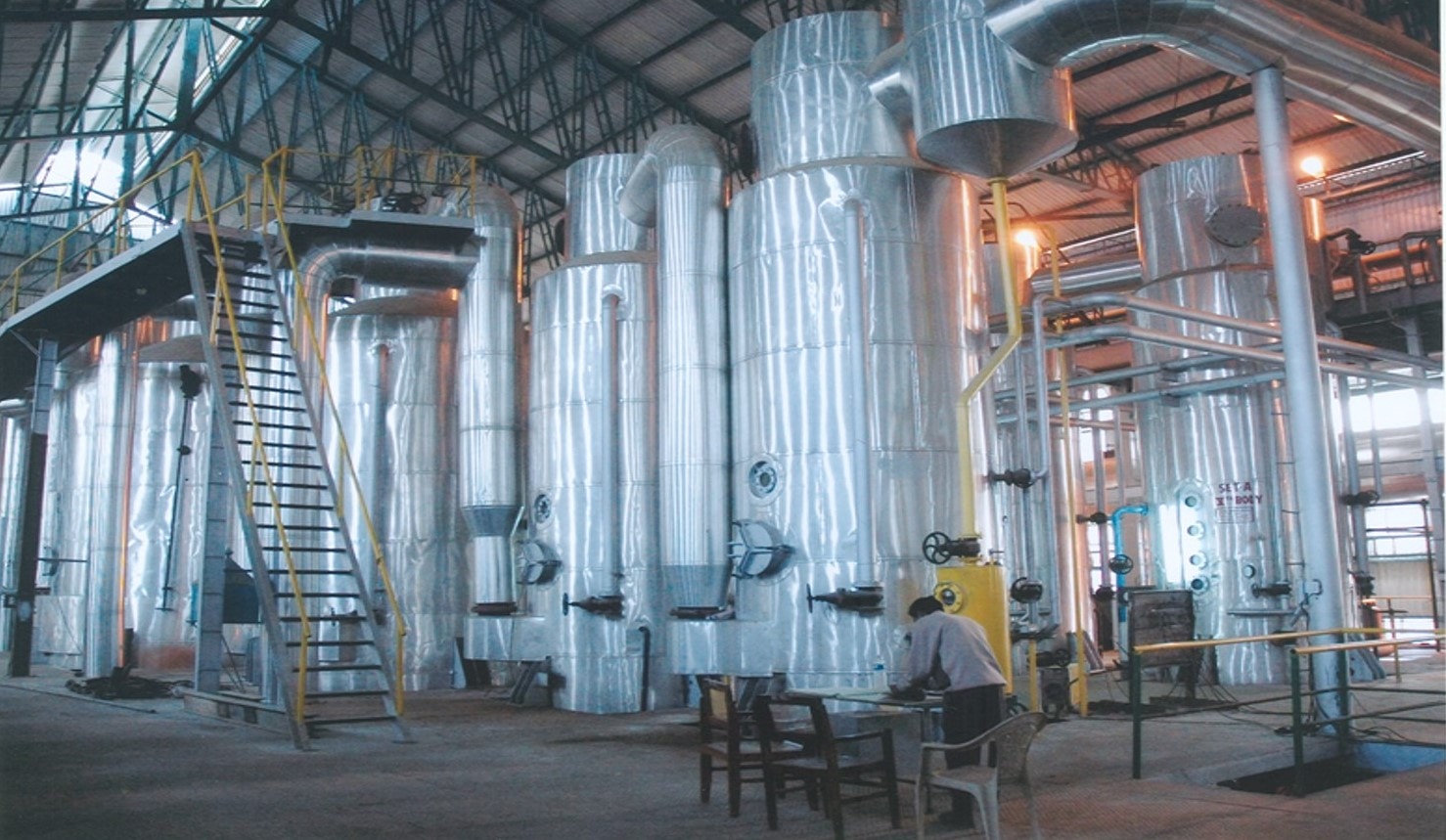
MULTIPLE EFFECT EVAPORATORS
Application
Working Principal
Manufacturing Range
Design Features
The following are some key features and advantages of the evaporators supplied by ASHOKA-
• Efficient distribution of steam with baffle plates
• Efficient removal of non-condensable gases hence better heat transfer
• Less space required due to long tube design
• Less inversion losses because of less retention time of juice at high temperature
• Calendria is designed by keeping sufficient annular space & to give the tangential steam entry of exhaust and exit of non condensate gasses from the centre
• Umbrella above top tube plate is given to avoid carry over juice particles through vapour
• Attainment of high brix of the syrup
VACUUM PANS
Application
• Low Head Batch Type Vacuum Pan
• Continuous Vacuum Pan
Pans are used for attaining consistent formation of crystals by means of competent removal of noxious gases and condensate. These operate on hydraulic and pneumatic operated discharge valves, which ensure low steam consumption and better performance.
Working Principal
Manufacturing Range
Design Features
The following are some key features and advantages of Vacuum Pans supplied by ASHOKA-
• Increased evaporation rate due to fast boiling
• High heating surface volume ratio
• Quicker & higher circulation resulting of uniform grain size
• Boiling period of massecuite is minimized resulting in better pan capacity
• Steam consumption reduced about 25% in comparison to a high head pan
• Uniform steam distribution in Calendria by providing annular space around the tube plate
DISCHARGE VALVE
Pan hydraulic discharge valve are used to minimize the pan dropping / washing time & alternatively increases the pan capacity by 5 to 10%.
Some key features are-
• Save 10 minutes during pan dropping thus increases pan capacity
• Easy for operation
• Single person operation
• Less maintenance by avoiding gear mechanism.
Frequently Asked Questions
We primarily serve the oil & gas, energy, and resource extraction industries. Our expertise spans exploration, offshore drilling, processing management, and asset maintenance, making us a comprehensive partner for end-to-end operations.
We follow strict international safety standards, implement advanced monitoring systems, and conduct regular risk assessments. Our teams are trained in emergency response and operational best practices to ensure safe and efficient drilling in complex environments.
We utilize modern tools such as seismic imaging, geological modeling, and data analytics to assess site viability and resource potential. These technologies help us make informed decisions and optimize development strategies.
We enhance efficiency by optimizing system design, integrating automation, and continuously monitoring performance. This allows us to increase output, reduce waste, and maintain consistent product quality while adhering to safety standards.
Our services include preventive and predictive maintenance, real-time equipment monitoring, inspections, and lifecycle management. These measures help reduce downtime, extend asset life, and ensure reliable long-term operations.