SILOS & TANKS
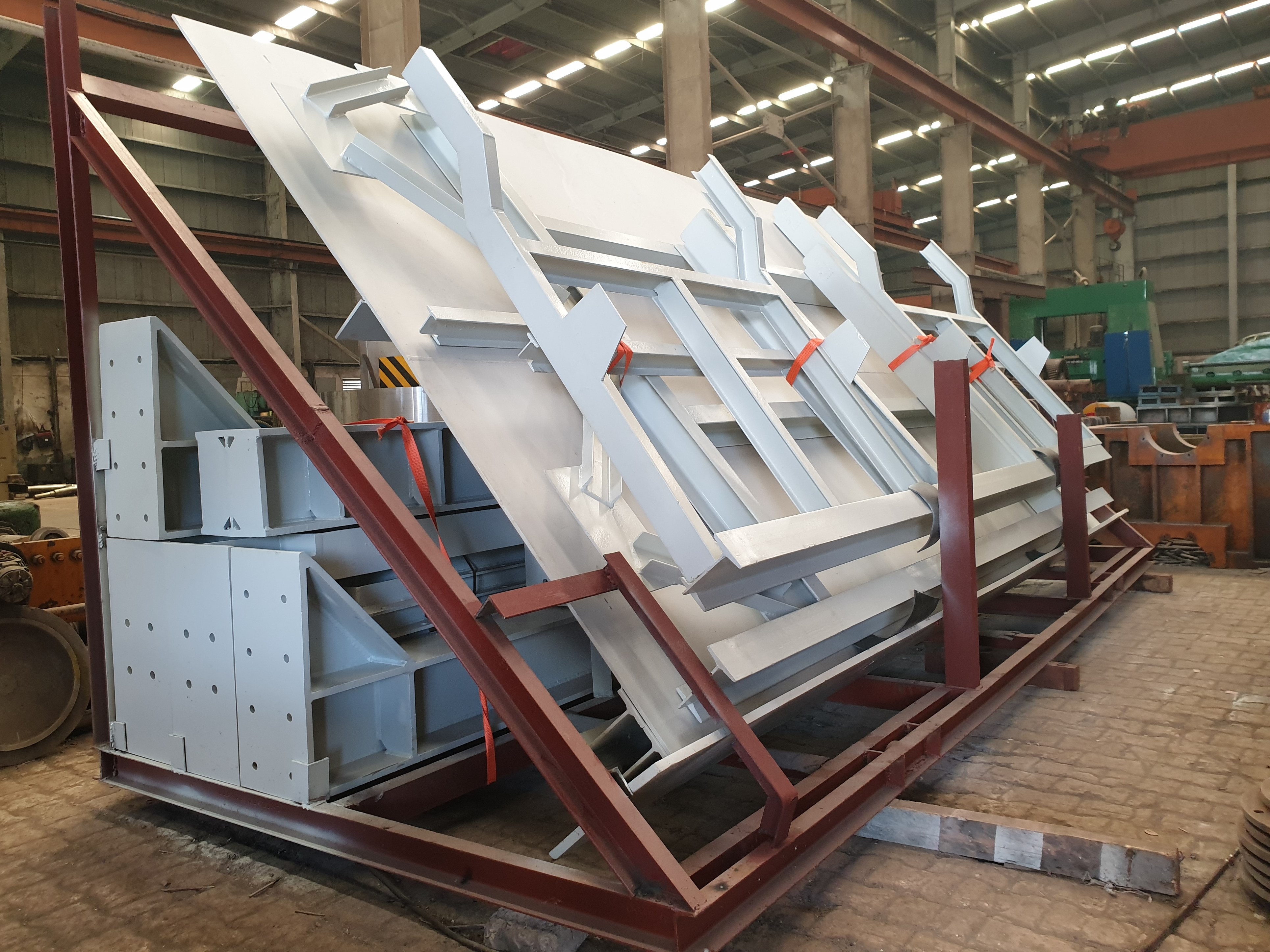
SILOS & TANKS FABRICATION
Type of Equipment
These specifications are used in conjunction with the following codes:
• AWS - American Welding Society
• UBC - Uniform Building Code
• FDA - Food and Drug Administration
• OSHA - Occupational Safety and Health Administration
• ASTM - American Society for Testing and Materials
• SAE - Society of Automotive Engineers
• SSPC - Steel Structures Painting Council
Design Criteria
• Wind factor with combined height, exposure and gust factor coefficient is kept in mind.
• Seismic zone/forces factor
• Combined live, dead, and roof loads are uniformly distributed, with all nozzles, manhole and filter locations designed accordingly.
• Silo design is based on buckling strength of the body and supporting structure.
• Silos are designed to atmospheric pressures.
• The inlets and discharge gates/equipment are designed keeping in mind the load and fluidity of the material(s).
• There are various other design criteria such as type of material, soil bearing capacity on full load, type of blending equipment (open air slides etc.) etc. which also have to be kept in mind.
Manufacturing Specifications
• When specified, all structural welding shall conform to WPS standards
• Shell seams shall have proper penetration using appropriate welding wire with automatic MIG or SAW welding equipment.
SURFACE PREPARATION
All weld surfaces with sharp edges are ground, any undercuts are repaired and re-ground. All weld spatter is removed and exterior surfaces are sand or grit blasted as per requirement.
COATINGS CARBON STEEL
Silo exterior is coated with minimum two coats rust preventive gray or red primer (of branded manufacturer) and finish epoxy or enamel paint as per requirement.
Materials Standards
Some of the common grades of steels used are-
• Steel plates as per IS 2062 Grade A/B/C, ASTM 569, SA 516, A36 etc.
• Structural shaped/sections as per ASTM A36
• Structural pipes as per ASTM A53
• Handrails, ladders, cages and platforms are designed to meet OSHA requirements and are welded units to minimize field erection.
Frequently Asked Questions
We primarily serve the oil & gas, energy, and resource extraction industries. Our expertise spans exploration, offshore drilling, processing management, and asset maintenance, making us a comprehensive partner for end-to-end operations.
We follow strict international safety standards, implement advanced monitoring systems, and conduct regular risk assessments. Our teams are trained in emergency response and operational best practices to ensure safe and efficient drilling in complex environments.
We utilize modern tools such as seismic imaging, geological modeling, and data analytics to assess site viability and resource potential. These technologies help us make informed decisions and optimize development strategies.
We enhance efficiency by optimizing system design, integrating automation, and continuously monitoring performance. This allows us to increase output, reduce waste, and maintain consistent product quality while adhering to safety standards.
Our services include preventive and predictive maintenance, real-time equipment monitoring, inspections, and lifecycle management. These measures help reduce downtime, extend asset life, and ensure reliable long-term operations.